Journal
Erling Haaland's Face Shape on One Face: What Happens When Only the Jaw Moves
Haaland's lower face reads long and angular. We move only the jaw angle on one male face, front and side, and compare each step.
 Rebecca Wetherby
One footballer, one lower face
Look at Erling Haaland during a big match week and one thing stands out. His lower face reads long, with a firm, angular finish at the chin and jaw corners set clearly out.
I am describing what the photos show, nothing more. This post says nothing about anyone’s history, and it never claims our model becomes Haaland. The question is narrower: if only the jaw angle moves, how far does a face shift from a soft look to Haaland’s more angular one?
To answer it we use a single ordinary face and two separate edits. Everything else is held still, so the jaw gets all the credit and all the blame.
What does our model bring to the experiment?
Our model is a man in his early twenties with long, straight, very fair hair tucked behind his ears. He has a long face, a straight nose and pale deep set eyes. His jaw is soft: the angles under the ears are blunt and rounded, the line blends into the neck with a little fullness beneath it, and the chin sits a little back from his lips.
That baseline is useful for a reason. A long face has plenty of room for a sharper lower edge, and the jaw angle is one of the first things the eye lands on in profile. A different face, such as a short, wide one, would react differently to the same edit.
| Feature | Softer reading | More angular reading |
|---|---|---|
| Jaw corners | Rounded, set closer in | Clear, set further out |
| Outline | Tapers toward the chin | Runs straighter to the chin |
The table is a simple vocabulary, not a ranking. Neither column is better. They are two kinds of balance.
What does a sharp jaw angle do to the face?
The first edit is the one that matters most. In the side view, a crisp jaw angle appears under the ear and the jaw line runs clean and straight to the chin, separated from the neck. The nose, lips, chin position and hair do not change.
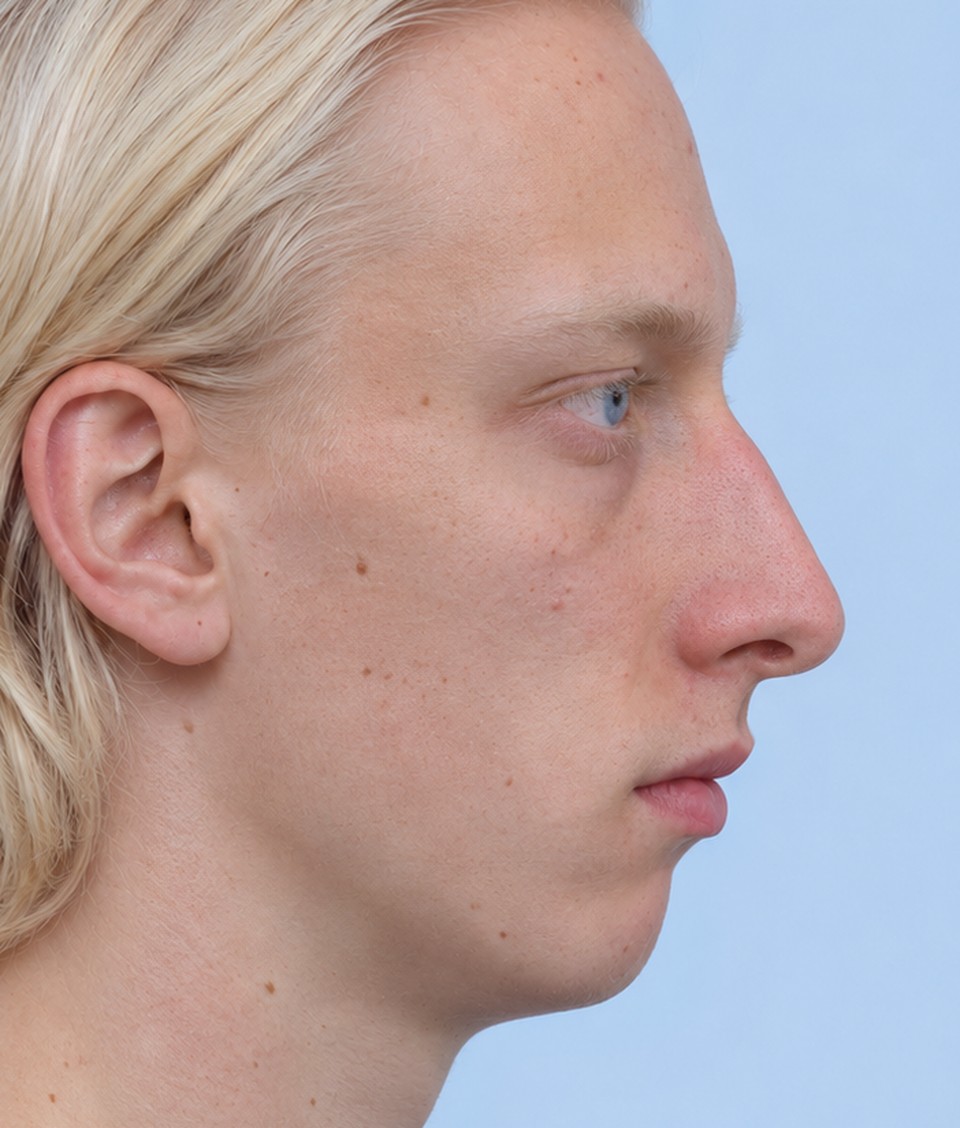
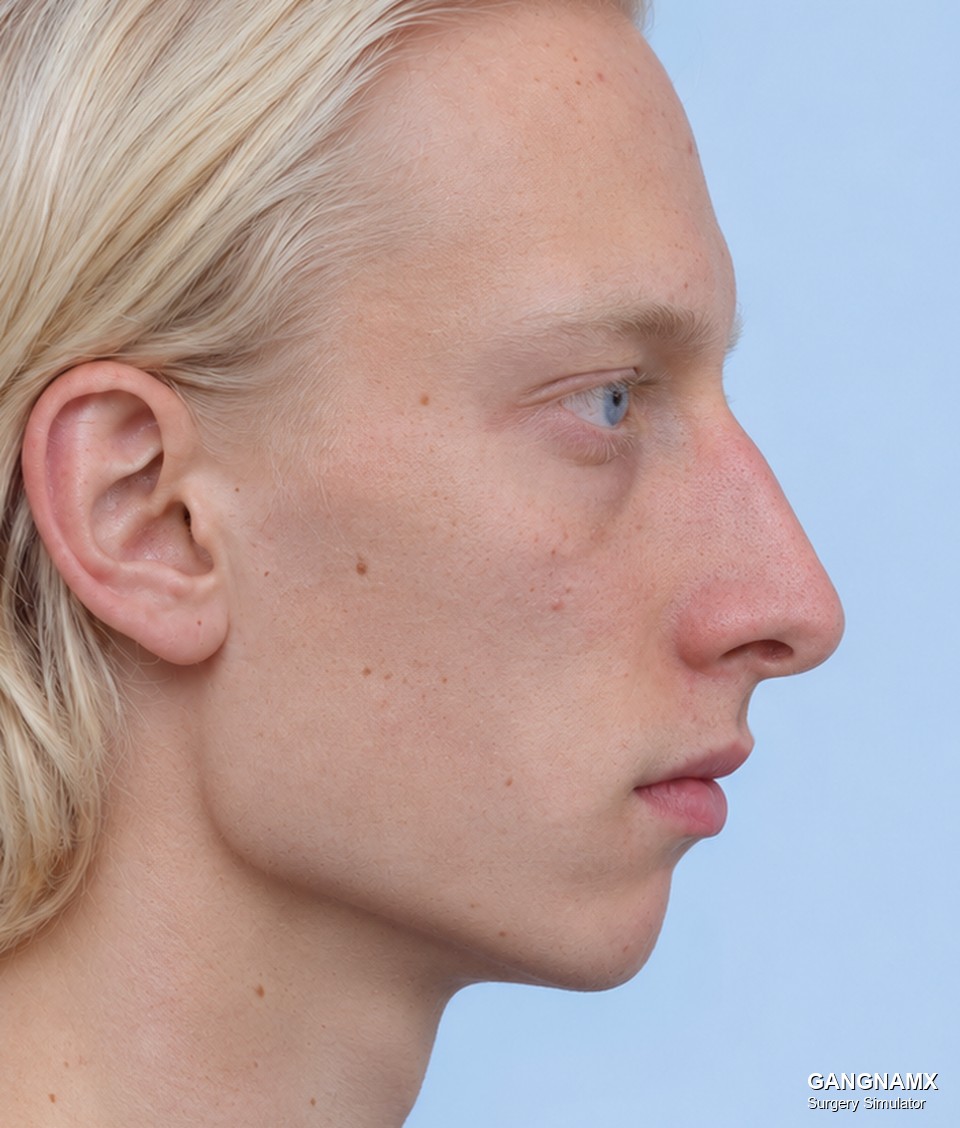
The lower face now has an edge. Where the original blended into the neck, there is a clear corner under the ear and a straight, crisp line to the chin. The long face reads stronger and more finished, not wider.
If you like this direction, notice that the change is small in size but clear in mood. That is typical of the jaw.
And what does the front view show?
The second edit repeats the idea from the front. The jaw corners become clear and angular, and the outline runs straight from them to the chin, with a distinct edge between the jaw and the neck. Chin length, nose, eyes, brows and hair do not change.
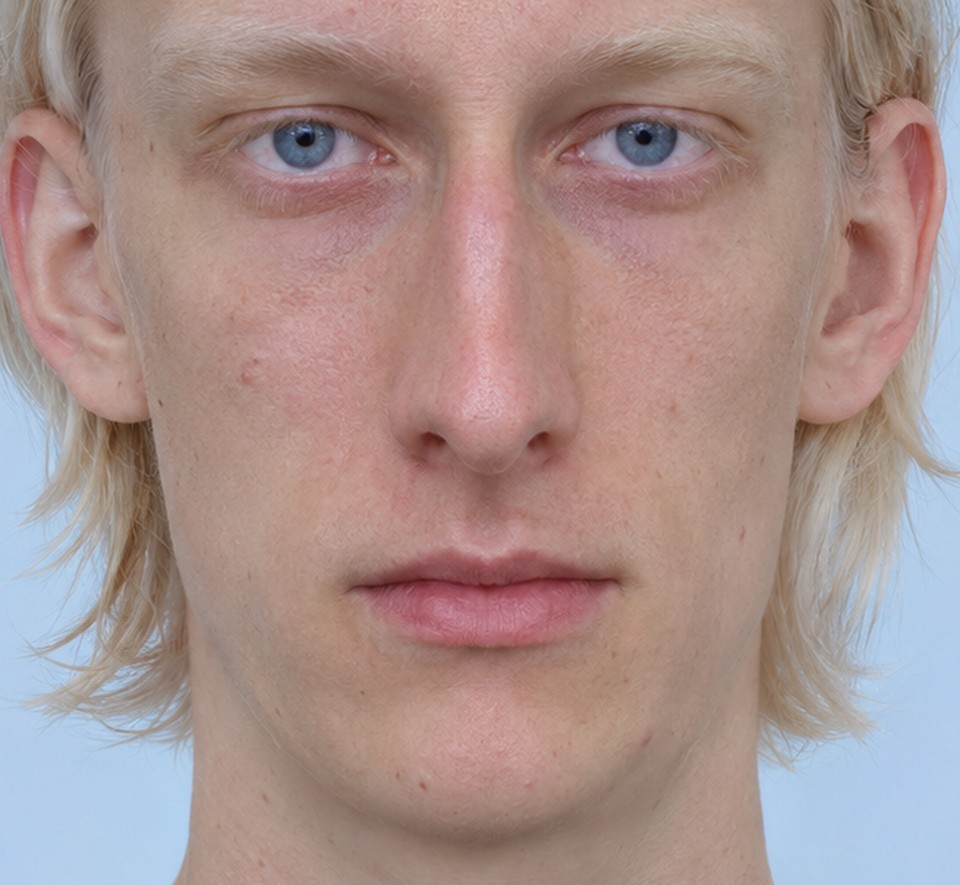
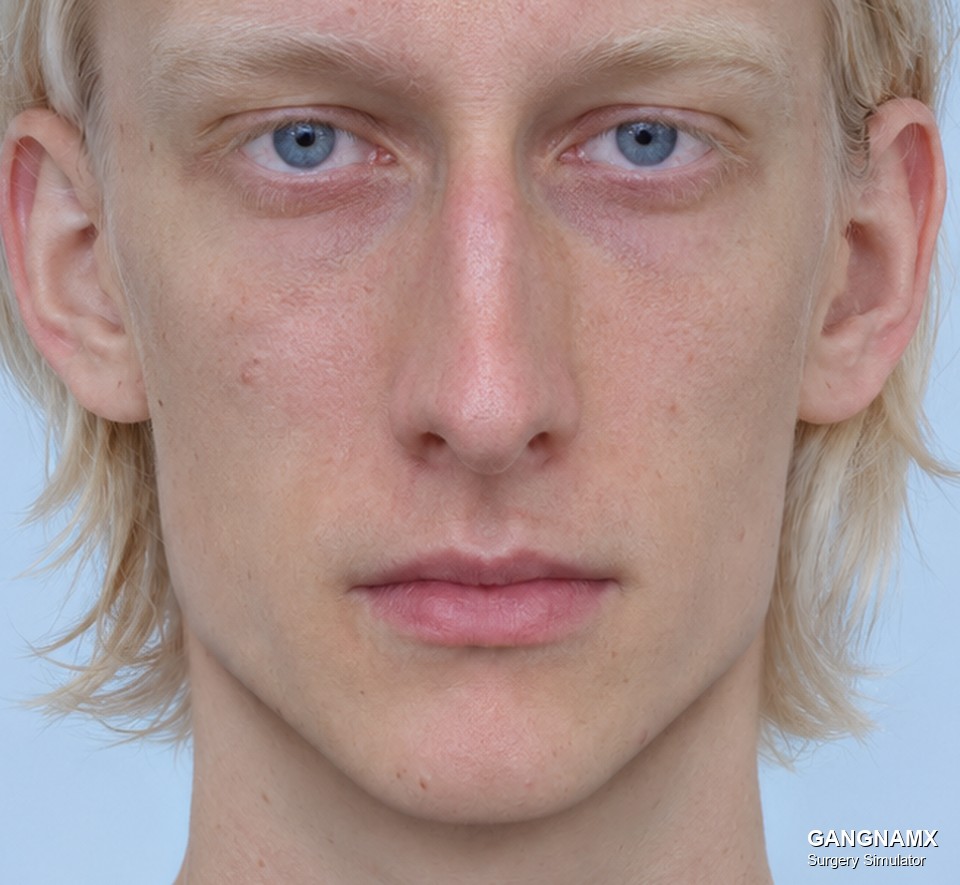
From the front, the soft, rounded corners have become firm angles, and the lower face looks more structured. It also looks a little more mature. The face does not get longer, it gets more resolved.
What does the one face teach us?
Two things stand out. The first is that a defined jaw angle changes the mood of a long face without making it wider. The lower face finishes with an edge instead of blending into the neck.
The second is that the change is felt before it is measured. The sharp jaw angle looked stronger, even though nothing about the eyes changed.
That is the real value of a controlled comparison. You see what one feature alone is doing, and you can decide whether you want it.
What the simulation cannot say
A simulation shows shape. It does not know your bone, your muscle or your skin. Defining a jaw angle can mean different things physically: bone, muscle and fat each play a part, and each has its own limits and risks.
Lighting changes the reading too. A hard side light creates an angular look, a soft front light does the opposite. Compare photos taken in the same light before you decide anything.
If a change like these appeals to you, the next step is a consultation with a qualified clinician who can examine your face. Bring a front and a side photo and be ready to talk about what you like, not about a famous face.
Short questions people ask
Can a jaw edit change a long face? A defined jaw angle gives a long face a stronger lower edge without making it any wider, as the first comparison shows.
Should I copy Haaland’s jaw? A copy never lands the same way on another face. Take the part you like and keep the rest of you.
Is it safe to preview a jaw change? A preview changes nothing on your face. Try the angle from the side and from the front, one at a time.
Simulation images by GangnamX.