Journal
GTA 6 Lets You Sculpt a Nose in Seconds. Here's the Same Experiment on a Real Face
A game lets you sculpt a nose in seconds. We ran the same idea on a real face: a raised bridge and a refined tip together, in profile.
 Rebecca Wetherby
In a game, a nose is a slider
Picture a character creator. You drag one bar and the nose gets longer. You drag another and the tip lifts. Within seconds you have a face you like, and nothing about it is permanent.
With GTA 6 dominating the conversation, that kind of sculpting is back in everyone’s head. It is a fun way to see how much a nose can change a face. But a real face is not a game character, and the gap between the two is where the interesting part lives.
So I ran the same experiment on a real photograph. One person, one nose, one controlled edit. I will show what holds up and what a slider cannot tell you.
Who is the real face?
Our model is a woman in her late fifties with chin length wavy white hair. She has a round face, soft lines, kind blue eyes and a nose with a clearly low, flat bridge and a rounded, soft tip. Her skin shows the ordinary signs of age, which makes her a more honest subject than a smooth game avatar.
She also shows something a game never does. Her nose sits in a face that has its own history, its own skin thickness and its own proportions. Any change has to make sense there.
| Question | Game character | Real face |
|---|---|---|
| Skin | Same on every character | Thickness and age change the result |
| Undo | One click | Not on a real nose |
| Limits | The slider range | Anatomy and a clinician's judgment |
| Judged from | Any angle you rotate to | Photos and real life |
Notice how little of the table a slider can answer. It handles shape and nothing else, which is a fine start and a poor finish.
That last row is why we run this in profile. The side view is where a nose shows its real shape.
What happens when the bridge and the tip are refined together?
Here are the raised bridge and the refined tip, together on one picture, in profile. The nostrils, the area under the nose, the lips and the chin stay as they were.
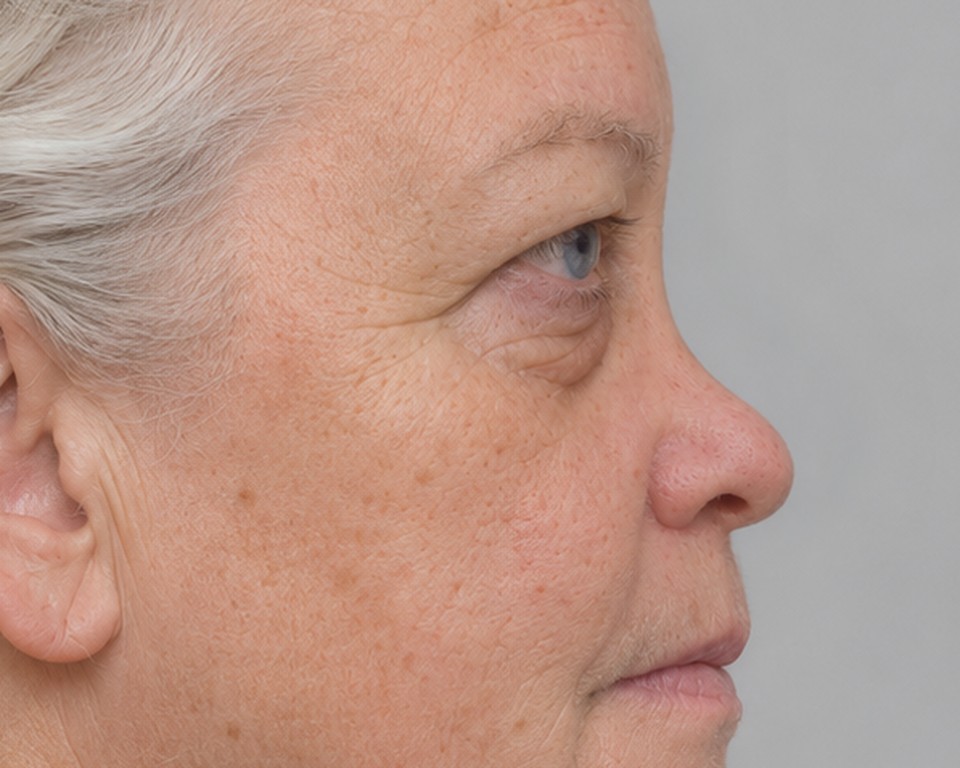
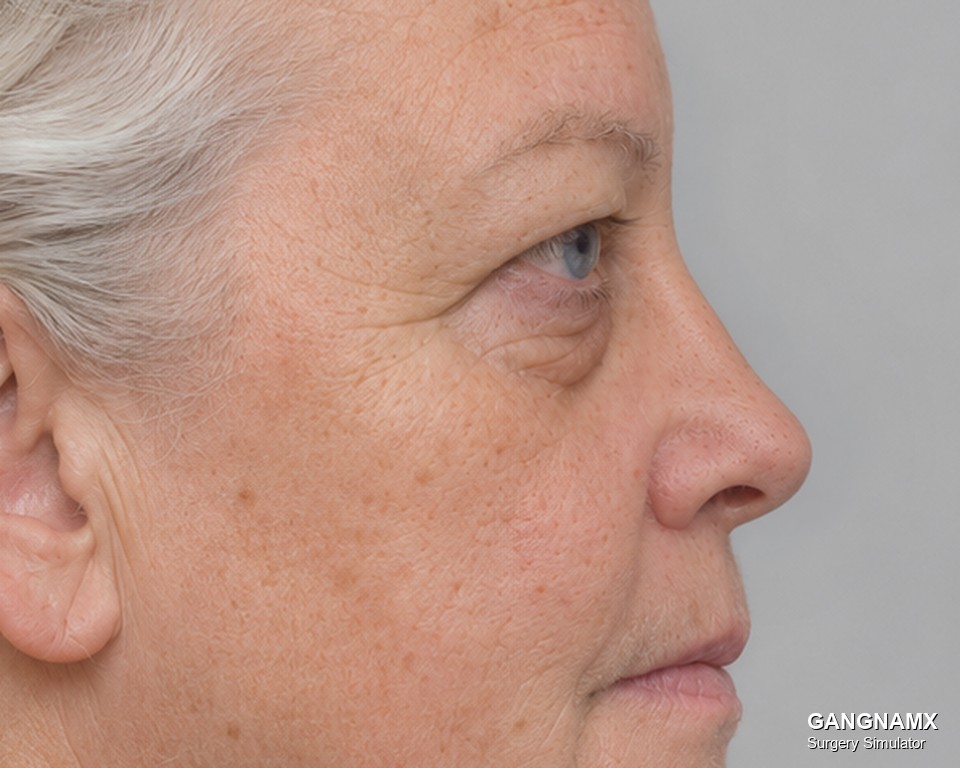
The nose is more defined and its line runs in one soft curve from between the eyes to the tip, with a more refined tip, and she still looks like herself. Her skin, her lines and her expression are the same. The nose sits in better proportion with the rest of the profile.
That is the part a game cannot reproduce. A good nose edit is judged against everything around it, and it should leave the person recognisable. A game would also let you push further, but on a real face a nose that goes too far looks hard and borrowed.
What a real nose adds that a slider ignores
Breathing is the first thing. A nose is an airway, and any real plan has to protect it. Skin is the second. Thick skin hides detail, thin skin shows every edge, and age changes both.
Then there is the plan itself. A simulation shows shape. It cannot tell you what is possible on your anatomy, or how your nose would look after healing. That judgment belongs to a qualified surgeon who has examined you.
Age deserves a word of its own. On a mature face, the tip often sits lower and the skin has less spring, so a very large lift looks out of place. A modest, well judged move tends to look the most natural.
If a game teaches anything, it is that small moves matter. A real consultation turns that into a careful plan.
Before you drag your own slider
Take a side photo in soft daylight, with your head level and your gaze straight ahead. Look at the line of the bridge, then the tip, then the whole profile. Decide what you actually want to change, in plain words.
A game gives you endless undo. A preview gives you the closest safe thing: a look at one change at a time on your own face, before any decision is made. That is a good place to start.
Simulation images by GangnamX.