Journal
Hugh Jackman's Jaw on an Ordinary Face: Which Changes Make It Read Sharp?
What makes a jaw read sharp? We break the look into a defined jaw angle and a firm chin and simulate the angle alone, then both together, on one ordinary male face in profile.
 Rebecca Wetherby
A sharp jaw is mostly an edge and a shadow
Every time a film run puts Hugh Jackman back in front of cameras, his jaw becomes the topic. People call it chiselled, square, powerful. Strip away the lighting and the grooming, and what is left is a clean lower edge and a chin that sits well forward.
This post is about appearance only. We say nothing about anyone’s history. We take the look people describe, break it into visible parts, and move them one at a time on an ordinary face.
That ordinary face is our model, a man in his early forties with a broad face, a soft, rounded chin and a jaw line that fades into the neck, with a little fullness underneath. He is a good subject because his jaw is real, not styled, and it starts a long way from the reference look. If a change reads clearly on him, it will read on most faces.
One rule keeps the experiment honest. Each step changes one thing, and everything else stays put. When two things move at once, you can never say which one did the work.
What are the parts of a jaw that reads sharp?
Look at a strong jaw from the side and you find two things. First, the chin projects, so the lowest point of the face sits roughly in line with the lower lip. Second, the line from the ear to the chin runs straight and clean, with a defined angle near the ear.
From the front, the jaw angles, the corners below the ears, set how wide the lower face is. The chin sets how the face closes at the bottom. Here we study the side view.
| View | What you notice | Where it comes from |
|---|---|---|
| Side | Chin in line with the lower lip | Chin bone projection |
| Side | A clear angle below the ear | Jaw angle, neck fullness |
| Front | A cleaner outline from ear to chin | Jaw width, muscle, soft tissue (not simulated here) |
Our model has no clear jaw angle under the ear, a line that fades into the neck, and a rounded chin that sits behind his lower lip. None of that is a flaw. It is simply where we start.
What does a sharp jaw angle do first?
The first simulation is the side view, and only the jaw angle moves. Under the ear, a crisp corner appears, and the jaw line runs clean and straight to the chin, separated from the neck. The nose, lips, chin position and hairline stay as they were.
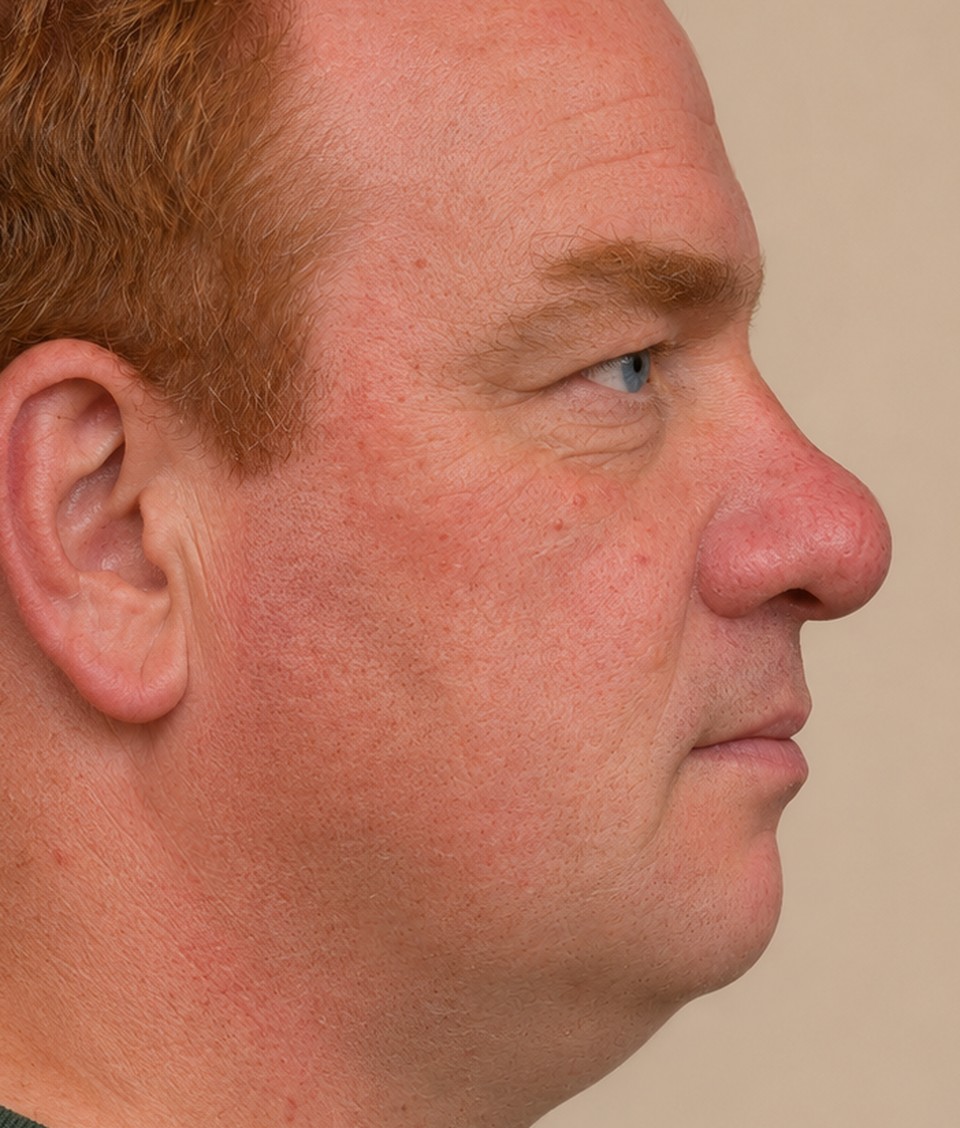
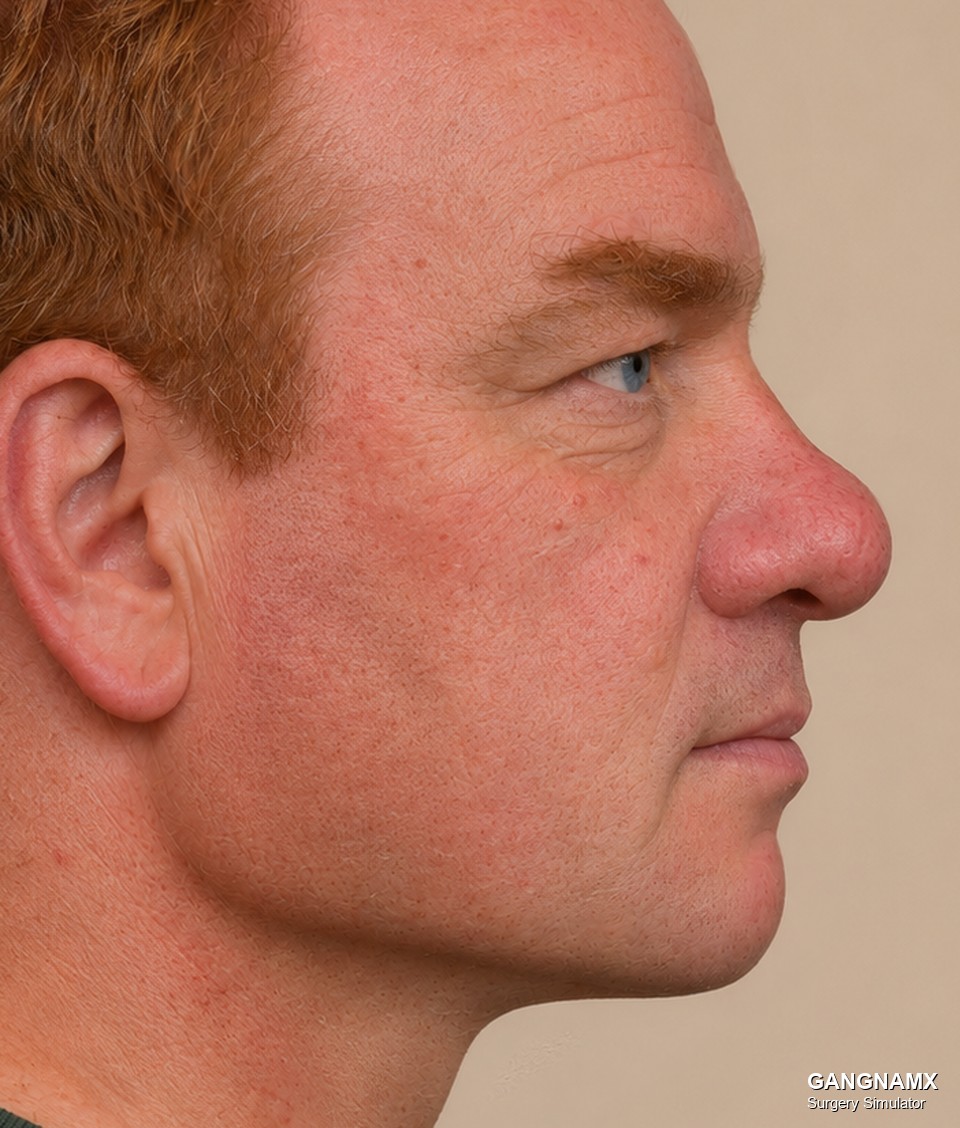
This is the change that decides the look. The jaw now has an edge: a clear angle below the ear and a straight, crisp line from there to the chin, with a visible break between jaw and neck. Where the original blended into the neck, the lower face now has a shape of its own.
That edge is what people mean by chiselled. It is a line and a shadow, and it needs no change to the nose, the lips or the eyes. A chin that projects helps the same look, and we add it in the last step.
What happens when the chin joins the angle?
In the last step, we look at the sharp jaw angle together with a chin that sits a little further forward, on one picture.
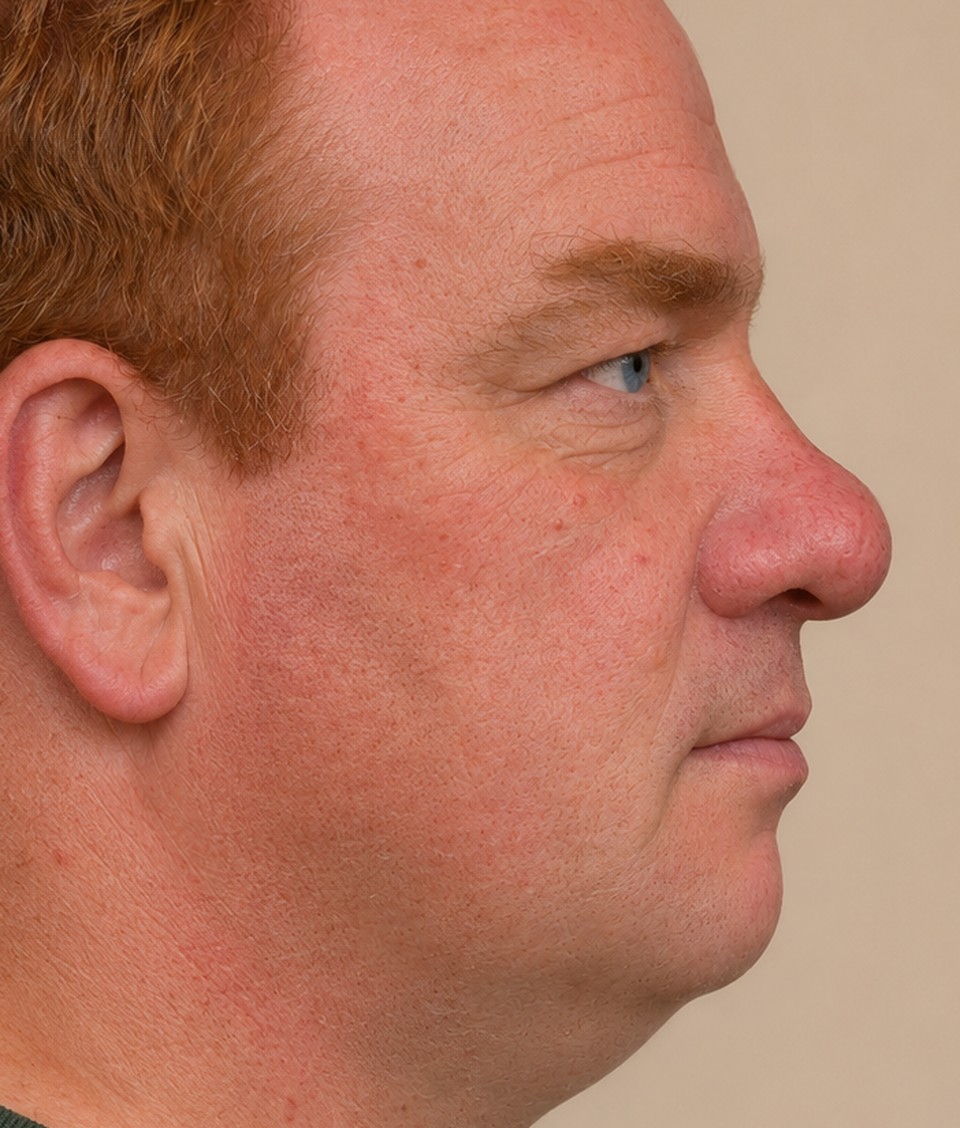
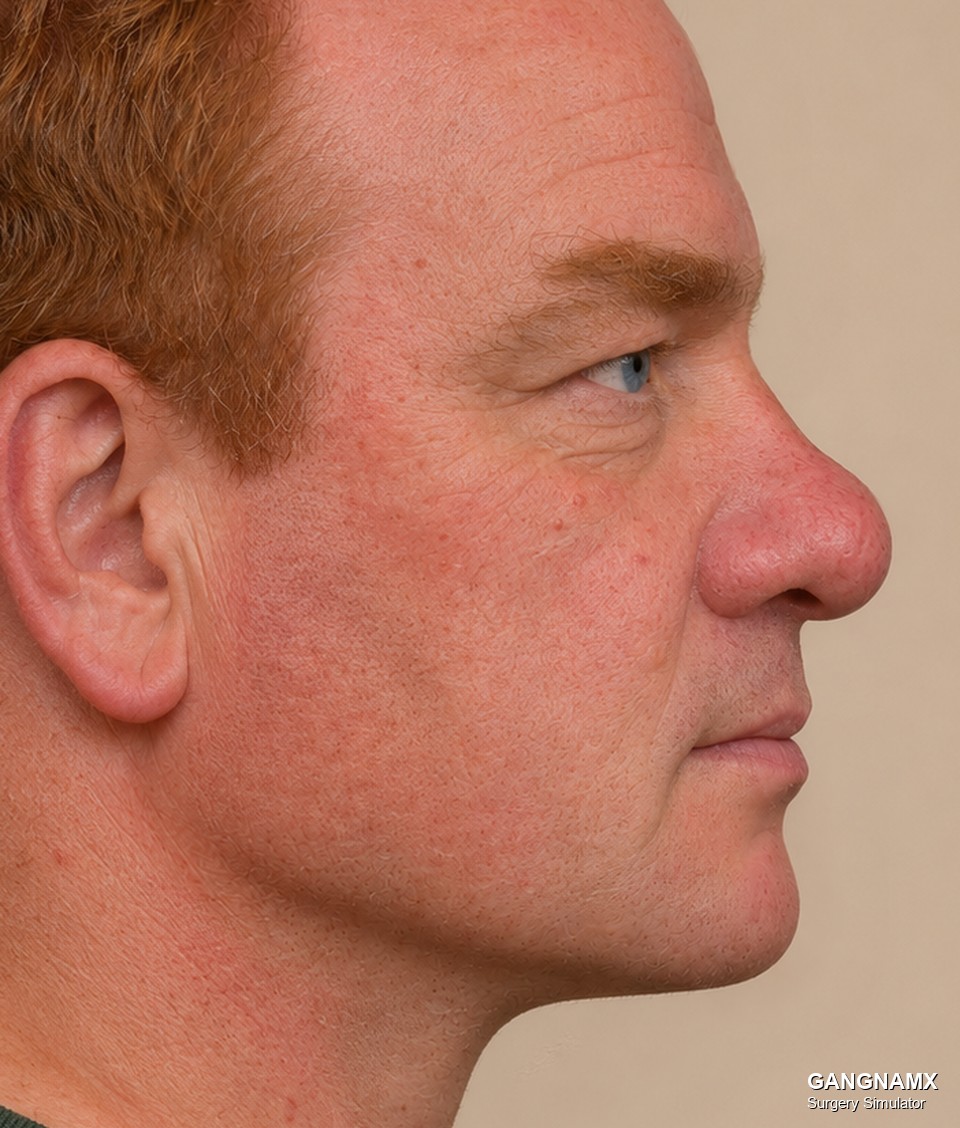
This is the closest the post gets to the look people describe. The angle under the ear is crisp, the line runs clean from there to a firmer chin, and the neck is clearly separated from the jaw. The model still looks like himself. He does not look like anyone else, and that is the point.
We are moving features toward a kind of look, not turning one person into another.
Why does the same jaw look different on every face?
Bone is only part of it. Facial hair, a short haircut, the angle of the camera and a strong key light all sharpen a jaw. A photo taken from slightly below makes the chin look larger and the jaw wider.
Skin and fat count too. A lean face shows its jaw edge easily. A fuller face may need a different plan, and sometimes the edge you like is a mix of structure and weight. That is a conversation for a clinician, not a simulation.
Proportion matters as well. The same chin projection suits a long face differently from a short one. Our model has a broad face, so a modest change goes a long way.
What would you ask a surgeon about a jaw like this?
Bring a front photo and a side photo taken in soft, even light, and think through these questions.
- Is my chin the main reason my profile looks soft, or is it my jaw angle, or my neck?
- Which change would you plan first, the chin or the jaw outline, and why?
- What can be done with the chin, and what can be done with the jaw outline?
- What would each option not change?
- How do I tell a natural amount from too much on my face?
Be wary of any plan that copies a famous face. A good plan starts from your proportions and your own features.
The one line verdict
A sharp jaw is a defined angle, a clean edge and a firm chin, and you can study each on your own photo before you decide anything.
Simulation images by GangnamX.